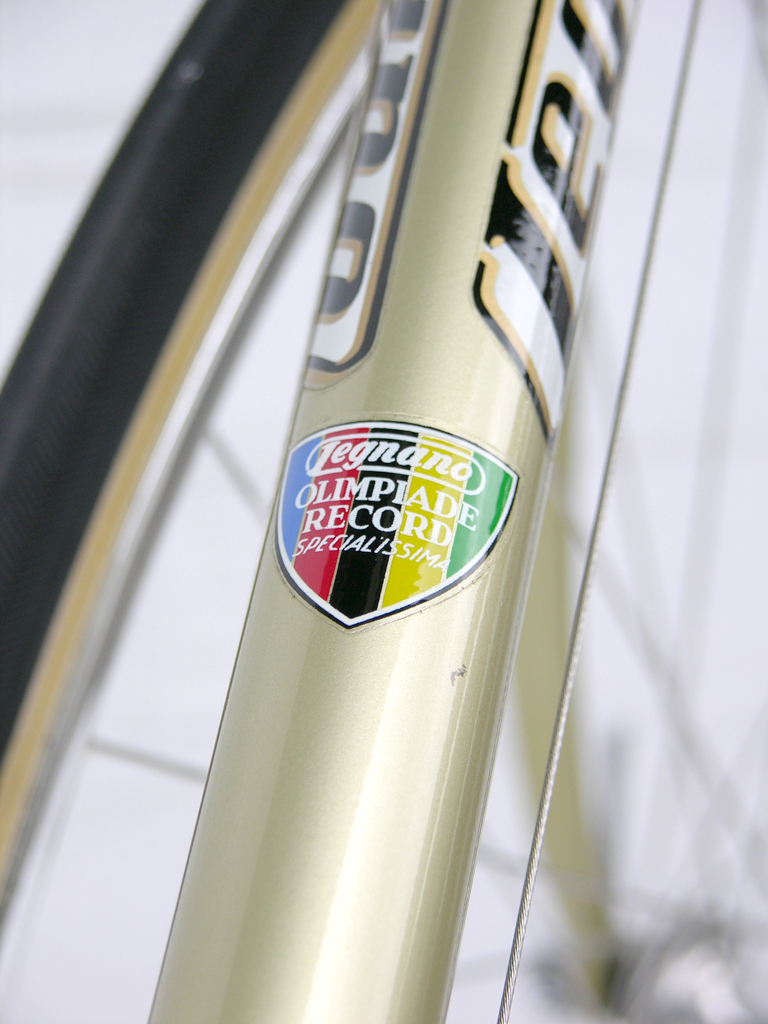
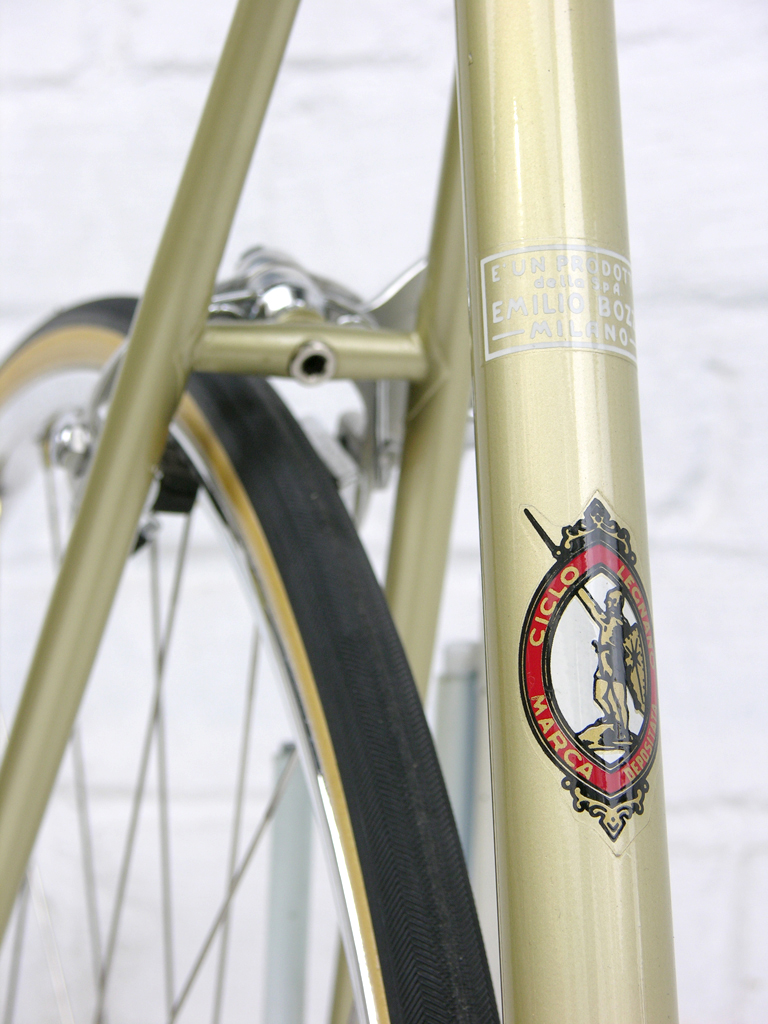
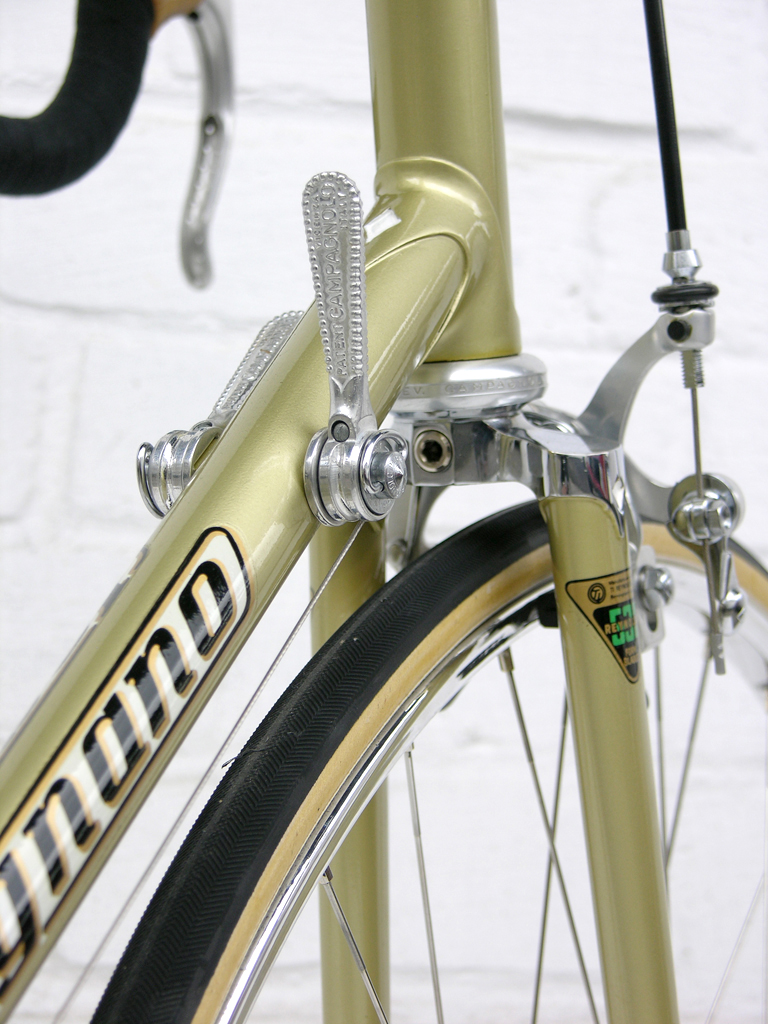
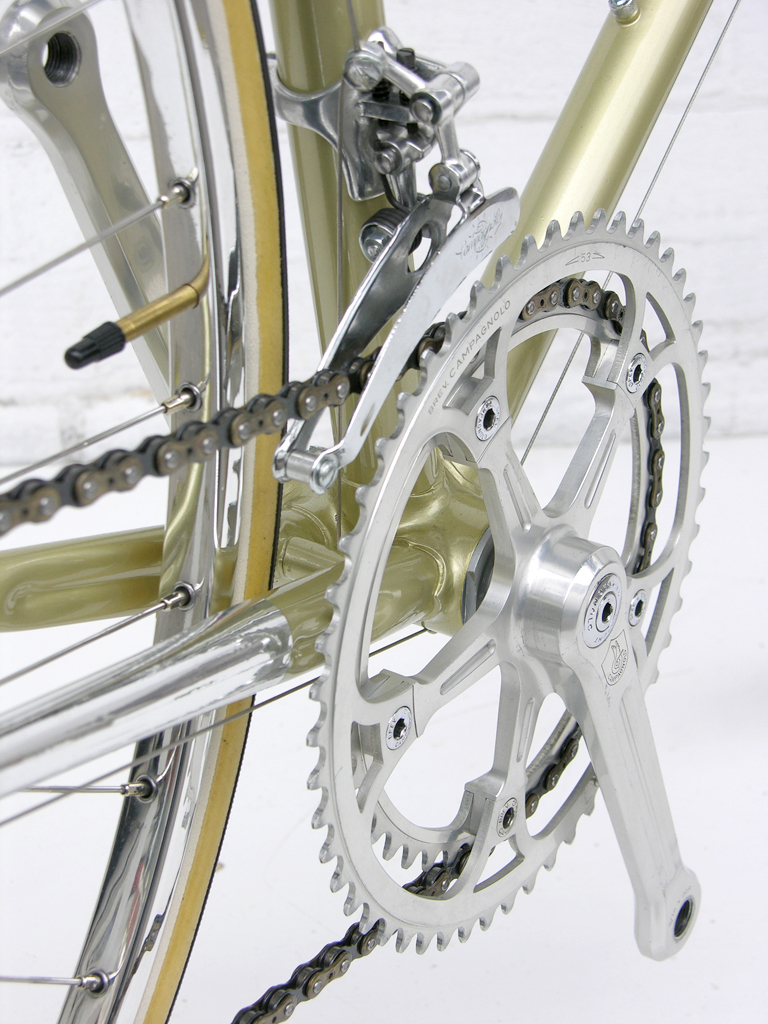
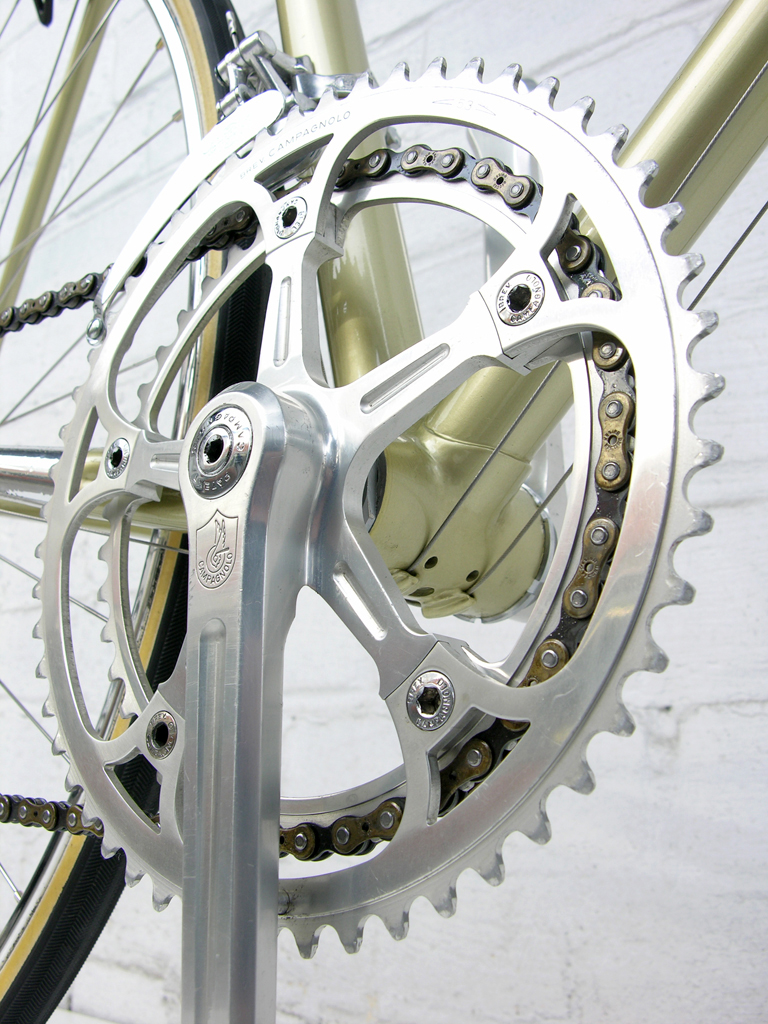
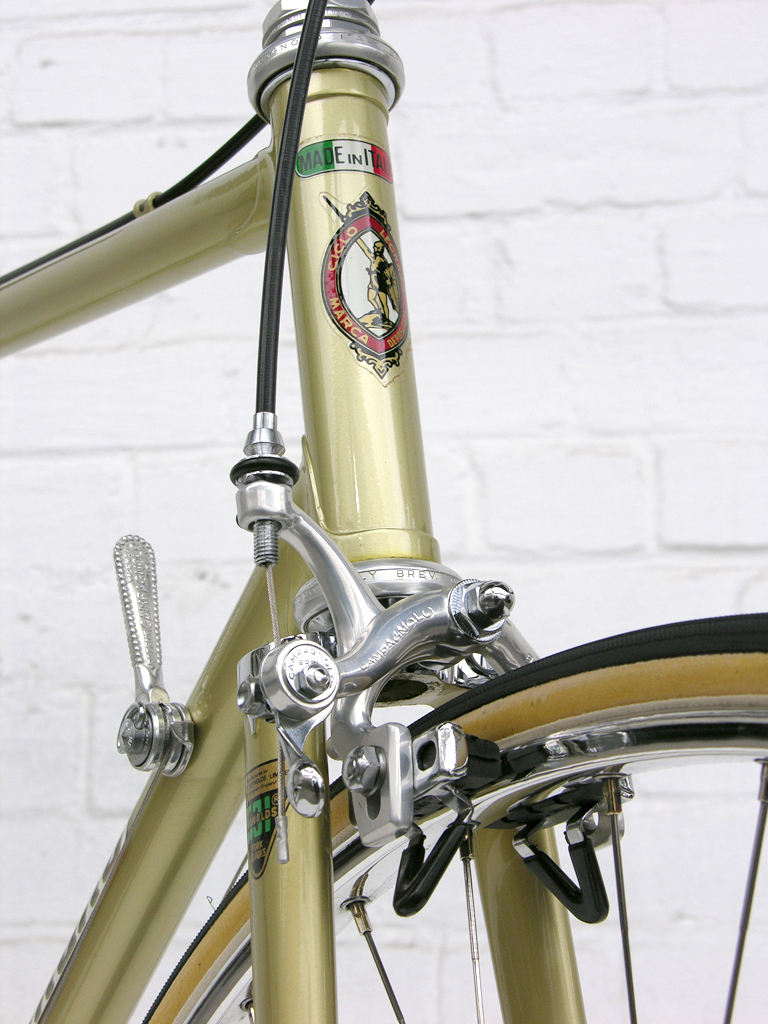
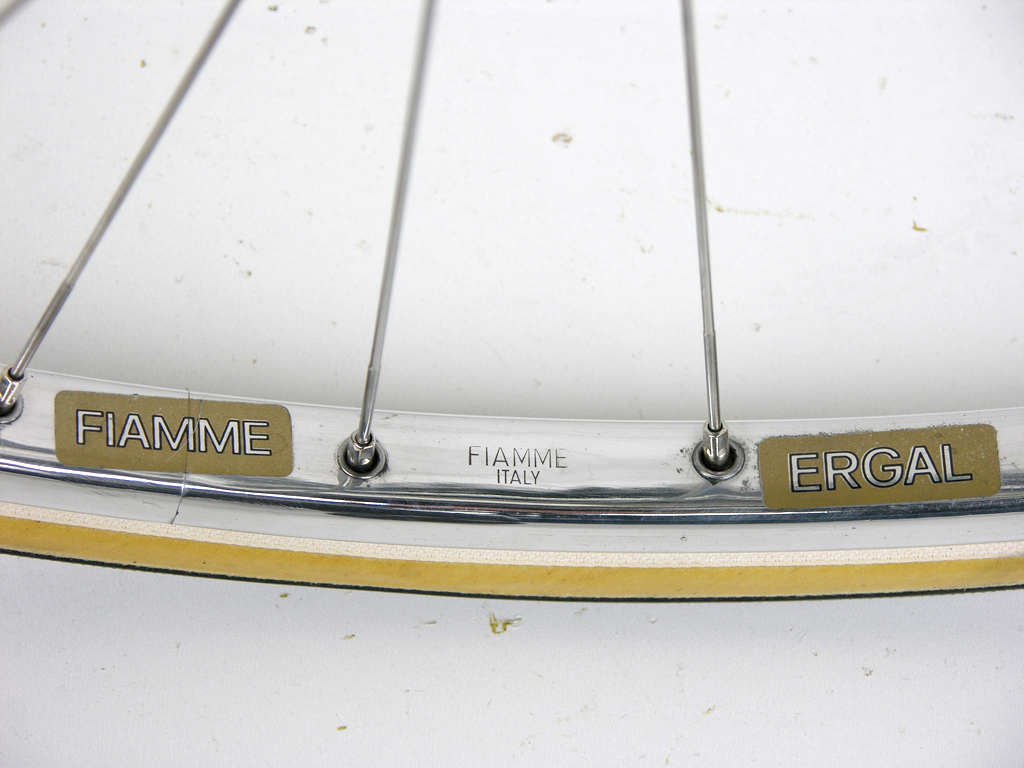
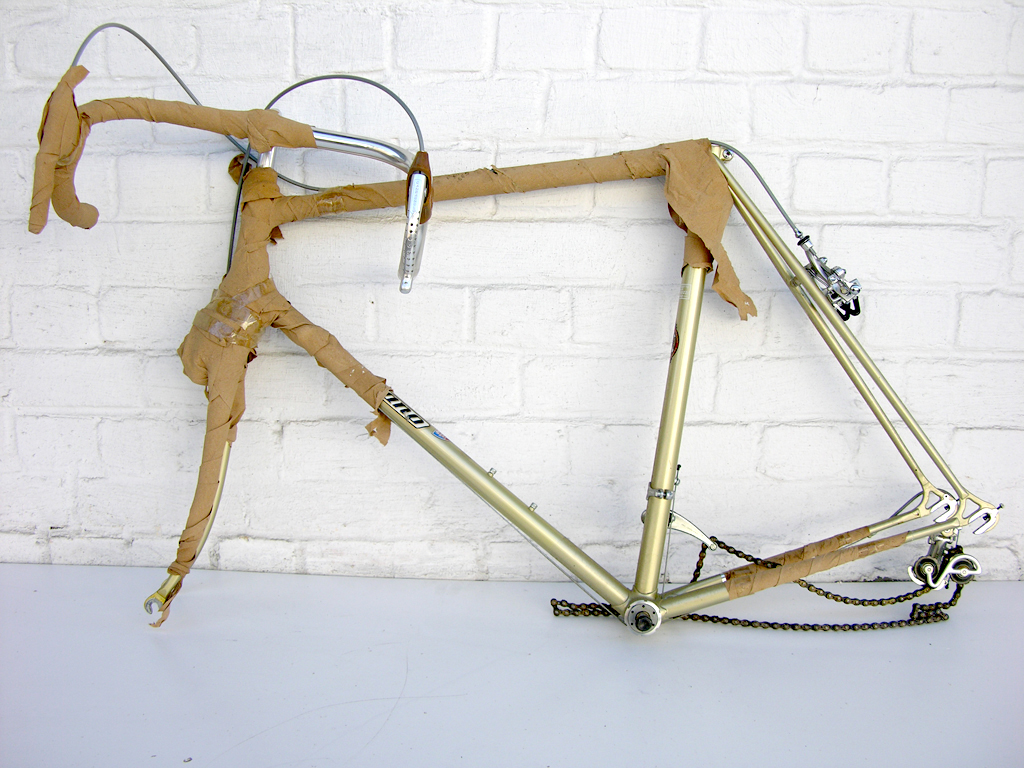
This 1978 Roma Olimpiade ‘Specialissima’ is not in my personal collection, it was listed for sale by Eisenherz Bikes of Düsseldorf, Germany in November, 2014. It is quite amazing that this bike is in NOS condition having survived quietly in a storage for 38 years at the time of writing. It is a beautiful example of the Legnano frames that were built from Reynolds 531 tubing from the early 70s through the early 80s and highly sought after by some collectors. Enjoy!







 condorino
This has a nice silver/bronze paint job. Most of the sixties ones seem to be green and some blue. I saw a sixties era red one a year ago on eBay, and there is one currently listed that is silver with a red seatpost tube decal. What colors did sixties ones come in, that you have seen? It seems there were maybe more colors available besides green and blue? This question is regarding Roma’s and Gran Premio race bikes.
Hi Jeff, and thanks for the post. My Legnano catalogs from the 1960’s list both the Gran Premio and Roma Olimpiade models as being available in ‘Verde Legnano Transparente’ or what I describe as ‘Lizard Yellow’. However I have also found both models in transparent blue, ruby red, and emerald green. The metallic quality of these colours is due to a silver base coat that was much more durable than the transparent lacquer top coat that was very prone to wear and the elements, often leaving only the silver base paint on much of the frame. There may also have been a silver finish available in these models however I have not come across it myself.
By the late 1960’s the two-stage finish was starting to be replaced with a more conventional or traditional single-colour finish that does not have the transparent/metallic characteristic. Having said that, Legnano produced a very wide range of city and sport bikes and the aforementioned catalogs show approx. 15 different colours (some solid and some transparent) that Legnano offered across different models. The ‘lizard yellow’ colour was primarily reserved for their better road models and one or two of the best ‘Sportivo’ models. The ‘lizard yellow’ colour was introduced in 1939 and very quickly came to define the Legnano brand in the same way that the ‘celeste blue’ defined the Bianchi brand. Prior to 1939, the Legnano Corsa and Roma models and the Legnano team colour was a non-transparent/metallic, muted olive green that you can see on this 1932 Roma model in the photo below.
The portacatena lugs where introduced 1977 if I am correctly informed. Diameter on seattube should be 27.2 aswell. IF it is 27 then my bet would be on an early 80s Gran premio blinged up.
Johan, you are absolutely correct, the porta-catena drop-outs came out in 78…….possible prototypes in 77. In other words, this bike is NOT from 76. Good eye.
Yes . . . a VERY good eye and thank you for that catch. Your 1977 dating of the Campagnolo Porta Catena (presented at the annual year end show) would be correct according to several online references (http://bikeretrogrouch.blogspot.com/2014/08/campagnolo-portacatena-neat-idea-whose.html ) and I have revised the date listing for the Specialissima to 1978.
Some other 1978 dating features for the brakes are: U.S. Government CPSC details like domed quick release levers and plastic coating on the brake shoe guides. Recessed Allen brake bolt fittings would be a way of dating but I’ve never heard of a date when this started as stock feature. A related and little known origin story I’ve heard second hand is that California builder Peter Johnson first recessed brake bolts which was widely copied dating to 1975.
I had a 1979 Nuovo Record equipped Colnago Super. It’s parts were as-shown in that year’s print catalog. Unique was a front derailleur with 4 holes and a straight clamp band. Both those features changed after a single year.
Bikes were assembled with parts-on-hand which makes dating indefinite. One other dating by part location that requires labor is to disassemble a hub’s locknut and look at the cone. There is a two number year-date stamp on the back.
Great to see this NOS bike from this era.
Good evening.Most Legnano serial numbers are on the seattube. Is it possible that the serial number of a ’70ies Legnano Olimpiade Record Specialissima is underneath the BB shell?This serial number is 2004.
Many greetings,
Jan RossaertBruges Belgium
Hi, I have this same model bicycle for sale, am trying to value it. It’s been garaged for 40+years, not in the same pristine condition. All original parts and in decent condition. How do I go about valuing and selling my bicycle? It says Emilio Bozzi Milano on the frame. It was was purchased, new in a bike shop in Pordenone, Italy in 1982. I am located in Maryland.
Hello Mary,
You can email email me at info@condorino.com. I would need some photos of the bike to give you some idea of the value. Hope this helps.
kind regards,
Mark Campbell
Toronto
FYI, one additional factoid which is of dubious importance yet some find interesting is that the bike above in question was made shortly after Bianchi purchased the Legnano holdings, which to my observations was a benefit to Legnano quality as seemed to be at a stand-still for many years.